BPH / Enlarged Prostate Treatment With TUNA/PROSTIVA (Transurethral Needle Ablation)
Click Here to Watch an On-Demand Webinar on BPH with Dr. Grant
TUNA /PROSTIVA RF therapy is a minimally invasive, in-office, and non-surgical procedure to shrink an enlarged prostate due to benign prostatic hyperplasia or BPH. Heat generated by radiofrequency waves is delivered to the prostate in a precise and controlled manner.
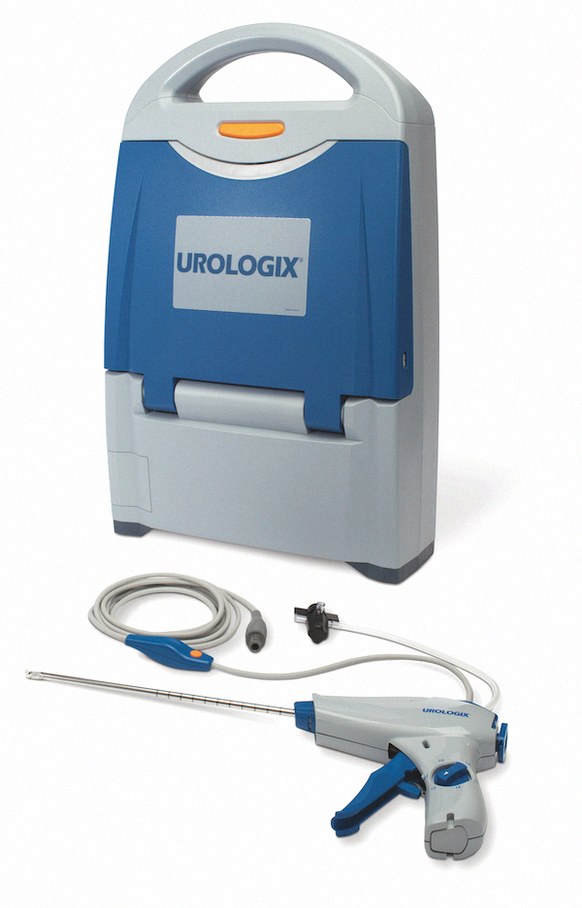 TUNA or Transurethral Needle Ablation for Benign Prostatic Hyperplasia starts with a transrectal ultrasound which will be used to take a picture of the prostate, determine its dimensions, and to inject lidocaine as local anesthesia. This is a very well tolerated step akin to numbing before a dental procedure and is very quick. The patient will then be repositioned and the TUNA can commence.
The TUNA is performed through a cystoscope inserted into the urethra. Each treatment takes 2 minutes and 20 seconds, and in the hands of Dr. Grant usually either five or seven treatments are performed in total. Thus, a TUNA takes approximately only 15 minutes once started. During the procedure, there may be some slight pain, but typically one primarily experiences the feeling of needing to urinate. Once finished, a catheter is inserted, and a urinary drainage bag is attached to the patient’s leg, and this will be used to drain the patient’s urine for 2 days. In Dr. Grant’s case, the patient takes their own catheter out two days later and follows up three days later in order to ensure that there is no urinary retention. Although there may be some irritation to urination at that point, generally there is little recovery to be done once the catheter is removed. Classically the TUNA/Prostiva is done on a Tuesday so the patient can be seen in the office on Friday before the weekend.
The TUNA procedure is performed in the downtown office of UrologyMax only. Patients will have been given prescriptions for Valium, antibiotics, and also pain medicine for use both before and after the procedure.
Common experiences are blood in the urine, the feeling of needing to urinate while the catheter is present, tingling at the tip of the penis, or even bladder spasms, which represent a sudden urge to urinate with bleeding or leakage around the catheter. If the catheter gets clogged, or if there is any concern after the procedure, we ask that the patient come back to our office the same day so we may assist him. If the catheter gets clogged after hours, we advise the patient to simply take out the catheter at that time, as successful urination will probably ensue. If not, an emergency room visit will be required. Fevers after a TUNA should never be considered normal and may be a sign of a rare infection. If you are experiencing an emergency that cannot be accommodated by an office visit the same or the next business day in either of our locations, please dial 911 or go to your nearest or favorite emergency room and ensure that Dr. Grant or Dr. Tobon are contacted to take part in your care. As a reminder, UroMax physicians have privileges at Reston Hospital Center, Holy Cross Hospital Silver Spring, and Holy Cross Hospital Germantown.
The video below nicely displays the performance of a TUNA. Dr. Grant performs a TUNA very similarly but with far fewer treatments. We focus more on the bladder neck and less on other areas of the prostate. Generally, we quote a 75-80% success rate with the TUNA in properly selected patients.
Expectations After A TUNA
Over the course of the next several weeks, the treated tissue will slowly be absorbed into the body. As the body absorbs the extra tissue, the prostate begins to shrink and the patient will see incremental improvements in their symptoms. Patients will experience the full degree of improvement within 10 weeks of the procedure. We quote a 75-80% success rate with TUNA/Prostiva, and success, on average, lasts 5 years.
Frequently Asked Questions
When can I expect my BPH symptoms to go away?
Most patients will notice improvement within two to six weeks. However, results may vary depending on the severity and duration of symptoms and the size of the prostate treated. Full improvement may not occur for two to three months. Follow your post-procedure instructions as to when to stop taking your BPH medication.
What side effects are associated with TUNA / Prostiva RF Therapy?
Possible side effects include increased length of catheterization, bleeding around the catheter, blood in the urine, pain/discomfort, urgency to urinate, increased frequency, and urinary tract infection. Patients may also experience a minor burning sensation when urinating for one to two weeks following the treatment.
What is the risk of incontinence?
There were no reported cases of incontinence in the original clinical study for approval of this therapy. The surgeons at UrologyMax generally quote a far less than 1% risk of incontinence after TUNA/Prostiva.
Will there be any sexual side effects?
During the original clinical study conducted for the approval of this therapy, less than two percent of RF therapy patients experienced any degree of impotence, and less than one percent of patients experienced retrograde ejaculation. We have noticed, however, a 10-20% incidence of reduced semen volume after a TUNA/Prostiva, so we quote this as a more realistic expectation.


Frequently Asked Questions
How do I schedule an appointment at UrologyMax?
Schedule online or call 1-800-876-6299 or use our online booking. Same-day and telehealth appointments are available.
Does UrologyMax accept insurance?
UrologyMax works with most major insurance plans. Contact our billing team at 1-800-876-6299 to verify your coverage before your visit.
What should I bring to my first urology appointment?
Bring your insurance card, photo ID, medication list, prior test results, and a completed patient intake form available on our website.
Are telehealth consultations available?
Yes. UrologyMax offers telehealth consultations for many urological concerns, including ED prescriptions, follow-up visits, and second opinions.
What makes UrologyMax different from other urology practices?
UrologyMax combines advanced robotic surgery capabilities with discreet online ED medication ordering and a patient-first approach to comprehensive urological care.